

Kite Packaging Reveals the Hidden Cost of Over-Packaging: How UK Businesses Are Wasting Thousands Every Year
Kite Packaging reveals that inefficient packaging is quietly draining budgets and damaging sustainability credentials in the UK.
Coventry, England, April 22, 2026 (GLOBE NEWSWIRE) -- Kite Packaging is urging UK businesses to rethink their approach to packaging, following new industry analysis showing that inefficient and non-compliant packaging choices are costing companies far more than they realise. From oversized cardboard boxes that inflate shipping costs, to materials that fall foul of tightening compliance regulations, the penalties of poor packaging decisions are quietly accumulating across the supply chain with meaningful savings available to those willing to take a more strategic approach.
According to experts at Kite Packaging, one of the UK's leading independent packaging suppliers, businesses that take a strategic approach to packaging selection, rather than defaulting to whatever is cheapest or most convenient, can achieve meaningful cost savings while simultaneously strengthening their sustainability credentials.
"We speak to businesses every day who have no idea how much they're overspending on packaging," said a spokesperson for Kite Packaging. "Whether it's a box that's two sizes too large, a bag that doesn't meet current environmental legislation, or a setup that generates excessive waste in the packing room, the cumulative impact on margins is significant. And in the current economic climate, that's simply not sustainable."
Kite Packaging LTD
The Size Problem: When Bigger Is Not Better
One of the most widespread and costly errors businesses make is using packaging that is simply too large for their products. While this may seem like a minor inefficiency, the
knock-on effects are considerable. Oversized boxes require more void fill materials to protect contents in transit, take up more space in vehicles and warehouses, and increase both shipping weight and dimensional weight charges, a pricing model now used by the majority of UK couriers.
Dimensional weight pricing, where the size of a parcel rather than its actual weight determines the shipping cost, is one of the most underestimated expenses for e-commerce and distribution businesses. A product weighing 500 grams, packed in a box twice the necessary size, can attract shipping charges equivalent to a 2kg parcel. Across hundreds or thousands of daily shipments, this adds up fast.
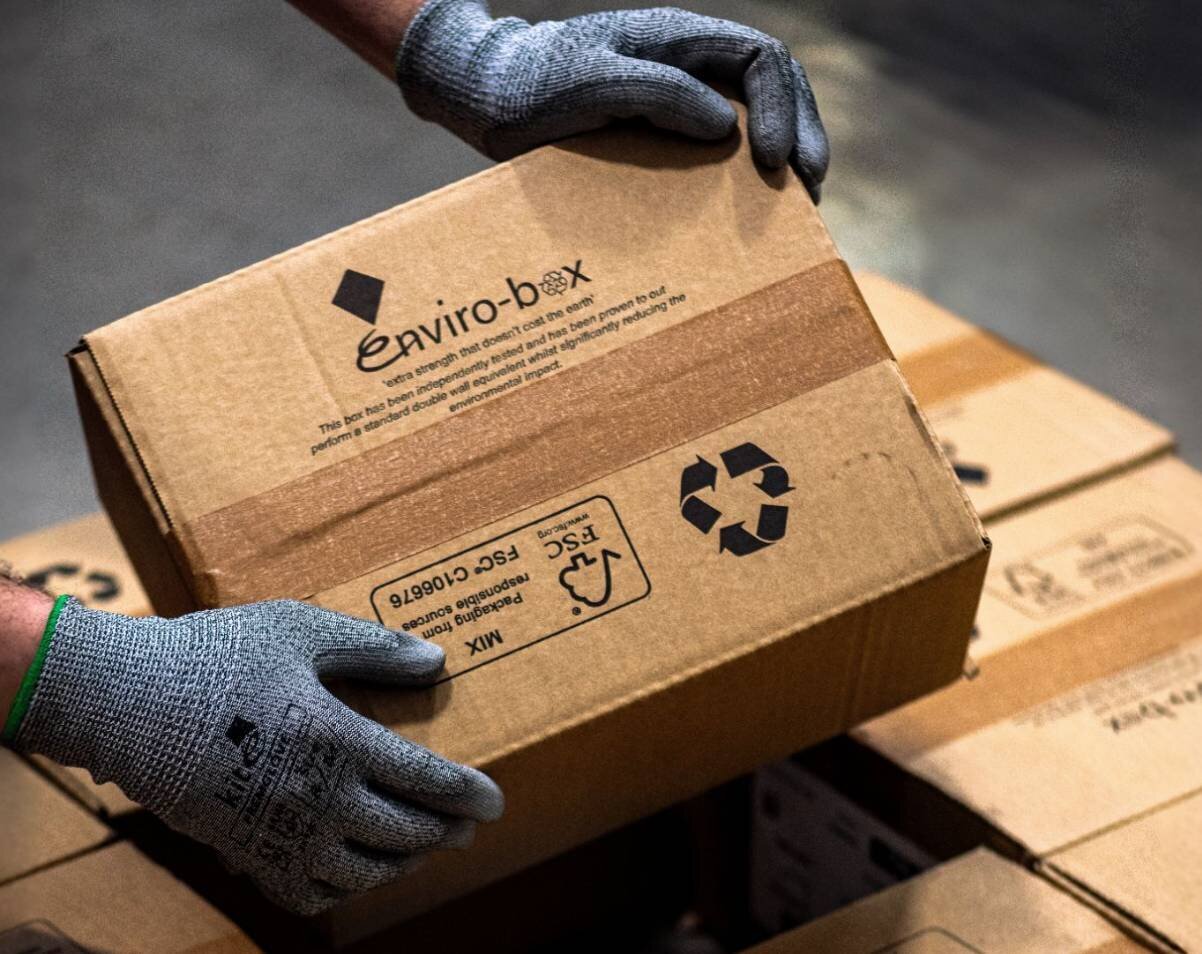
Selecting the correct size from Kite Packaging's extensive range of cardboard boxes which spans hundreds of standard dimensions with bespoke options also available, is one of the simplest and most impactful changes a business can make. The right box, chosen correctly from the outset, pays for itself many times over in reduced shipping, materials, and storage costs.

Kite Packaging LTD
Compliance Risk: The Regulation Wave Businesses Cannot Ignore
Beyond operational costs, UK businesses now face a rapidly shifting regulatory landscape that is fundamentally changing what responsible packaging looks like. Extended Producer Responsibility (EPR) legislation, which came into full effect for UK businesses in 2024, places greater obligations on organisations to take responsibility for the end-of-life impact of the packaging they place on the market.
Under these rules, companies that handle packaging, whether as manufacturers, importers, distributors, or retailers, may be required to register, report on their packaging usage, and contribute financially to the costs of recycling and waste collection infrastructure.
Non-compliance can result in financial penalties and reputational damage at a time when consumers and investors alike are scrutinising environmental commitments more closely than ever.
Kite Packaging's dedicated packaging compliance resources are designed to help businesses understand their obligations and make informed procurement decisions. The message is clear: compliance is no longer optional, and businesses that delay addressing their packaging footprint do so at increasing financial and legal risk.
"The businesses that are ahead of the curve on compliance tend to be the same ones that already think strategically about packaging," the Kite spokesperson added. "They've already audited what they use, why they use it, and whether there is a better option available. That process naturally leads to savings as well as compliance."
Bags: A Category Where Small Choices Have Big Consequences
Packaging bags represent another area where businesses commonly overspend or expose themselves to unnecessary risk. From polythene mailing bags and grip seal bags to paper carrier bags and biodegradable alternatives, the range of available options has expanded dramatically but so too has the complexity of choosing correctly.
The single-use plastics landscape in the UK continues to evolve, with increasing restrictions on certain bag types placing pressure on businesses to review their specifications. At the same time, some businesses are making the switch to paper or compostable alternatives without fully accounting for the performance trade-offs: including moisture resistance,
load-bearing capacity, and the true end-of-life credentials of the material in question.
Kite Packaging's extensive range of polythene and paper bags is supported by expert guidance to help businesses identify the most appropriate solution for their application: balancing compliance requirements, performance needs, and cost efficiency in equal measure.
The True Cost of Over-Packaging
The cumulative costs of poor packaging decisions span several areas that businesses may not immediately connect to their packaging spend: inflated shipping charges driven by dimensional weight pricing; excess spend on void fill to compensate for the wrong box size; higher warehousing costs from storing bulky or poorly chosen stock; financial penalties from non-compliance under EPR rules; greater product damage and returns linked to inadequate protective packaging; and reputational harm with environmentally conscious customers who expect waste to be minimised.
Taken individually, each of these issues might seem manageable. Taken together, they represent a material drain on profitability that a structured packaging review can address directly.
For businesses looking to audit their current packaging strategy, Kite Packaging offers expert support across its national network of branches. With over two decades of experience as one of the UK's leading independent packaging suppliers, Kite works with businesses of all sizes, from growing e-commerce brands to large-scale manufacturers, to identify where savings can be made without compromising on protection, compliance, or sustainability.
About Kite Packaging
Founded in 2001 with a unique employee-ownership model, Kite Packaging is one of the UK's premier packaging suppliers, operating from a network of regional distribution centres nationwide. Visit www.kitepackaging.co.uk for more information.
Media Contact:
enquiries@kitepackaging.co.uk | 024 7642 0065

Attachment

The Hidden Cost of Over-Packaging: How UK Businesses Are Wasting Thousands Every Year

New analysis reveals that poor packaging decisions from oversized boxes to non-compliant materials, are quietly draining business budgets and damaging sustainability credentials across the UK.
Legal Disclaimer:
EIN Presswire provides this news content "as is" without warranty of any kind. We do not accept any responsibility or liability for the accuracy, content, images, videos, licenses, completeness, legality, or reliability of the information contained in this article. If you have any complaints or copyright issues related to this article, kindly contact the author above.
